
Industry 4.0
Introduction to Industry 4.0
Industry 4.0 represents the next phase in the evolution of manufacturing and industrial systems — blending physical production with smart digital technologies, machine learning, and data-driven decision-making. It is a cornerstone of digital transformation, reshaping how businesses innovate, operate, and deliver value.
Key Benefits
Efficient Resource Use
Maximizing resources leads to cost savings and greater sustainability across operations.

Increased Efficiency
Automation and intelligent systems reduce waste, shorten cycle times, and improve productivity.

Enhanced Connectivity
Seamless communication between machines, systems, and people creates responsive, adaptive operations.
Industries We Serve
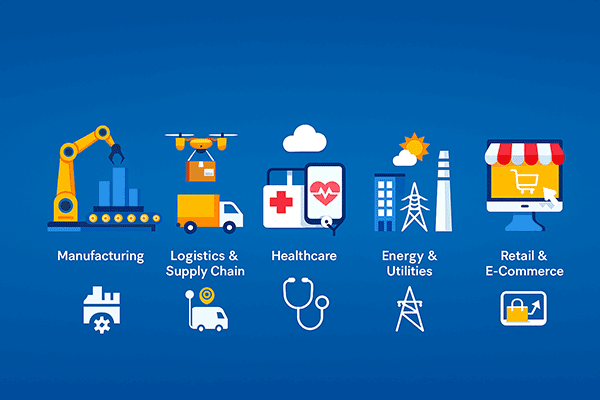
Our solutions support a wide range of industries, enabling them to embrace Industry 4.0 and achieve measurable outcomes:
- Manufacturing: Smart factories, predictive maintenance, and optimized production lines.
- Logistics & Supply Chain: Real-time tracking, route optimization, and demand forecasting.
- Healthcare: Connected devices, secure data management, and patient-centric care.
- Energy & Utilities: Smart grids, monitoring systems, and sustainability initiatives.
- Retail & E-Commerce: Customer analytics, inventory management, and digital engagement.
Applications of Industry 4.0
We deliver innovative software solutions designed to meet the challenges and opportunities of Industry 4.0:
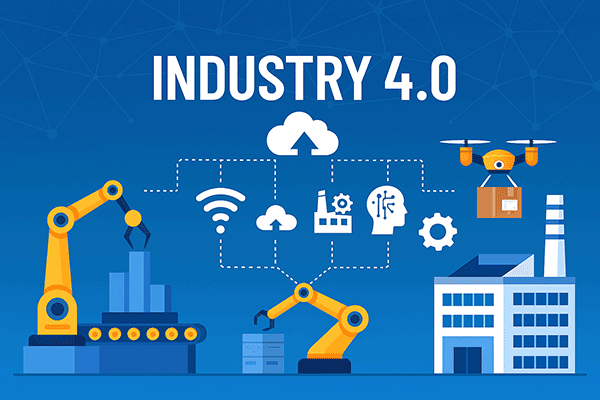
- Data-driven decision-making through advanced analytics and AI.
- Automation of critical workflows for higher consistency and quality.
- IoT integration to connect devices, sensors, and systems in real-time.
- Cloud-enabled platforms ensuring scalability and secure collaboration.
- Augmented and virtual reality applications for training and design.
Shaping the Future
Industry 4.0 is more than a technological upgrade — it is a transformation of business models, customer experiences, and competitive landscapes. By embracing these innovations, industries can unlock new growth opportunities, reduce risks, and contribute to a more sustainable future.